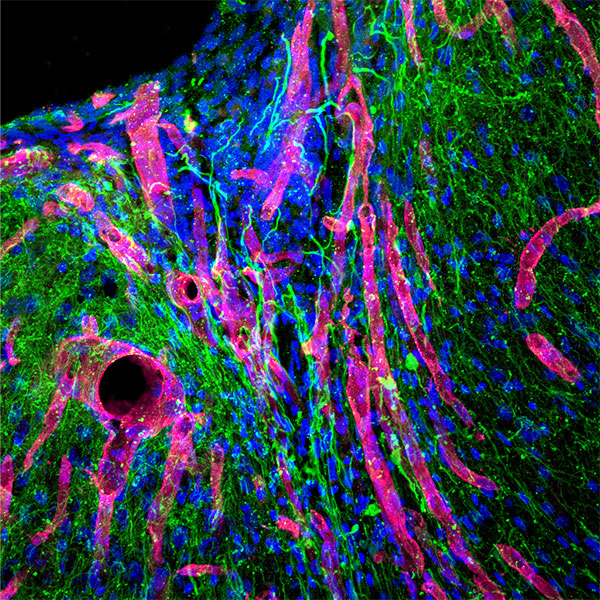
Engineering Transplanted Organs for Site-Specific, Adaptive Immunomodulation
Straight from Sydney’s dissertation abstract:
Despite advances in surgical techniques and immunosuppressive therapy, long-term survival of transplanted organs and tissues remains limited by immune-mediated injury, chronic rejection, and the systemic toxicities of lifelong immunosuppression. Standard therapies, while effective at reducing early acute rejection, fail to provide spatially confined immune modulation, leading to off-target toxicity and compromised graft longevity. This dissertation addresses these challenges by developing and translating strategies for localized, graft-directed immunomodulation that are modular, organ-agnostic, and mechanistically grounded.
The first component of this work establishes ORGANIC (Orthogonal Reactive Group Addition for Narrowed Immunosuppressant Capture), a chemical engineering platform that transforms donor organs into programmable, reloadable drug-capture interfaces. Donor tissues are functionalized ex vivo with bioorthogonal azide handles that persist in vivo for at least five weeks and retain the capacity to selectively capture cyclooctyne-modified therapeutics following implantation. Serial administration of click-modified probes resulted in dose-dependent signal enhancement, demonstrating the feasibility of repeated, adaptive targeting and enabling localized drug accumulation at sub-therapeutic systemic exposures. Using both murine and porcine models, we optimized perfusion protocols to achieve uniform azide installation across vascularized grafts, confirmed macromolecular capture at both protein and tissue levels, and demonstrated preservation of structural and functional integrity under clinically relevant conditions. Importantly, translation to porcine-scale organs not only established a viable clinical pipeline but also enabled higher-resolution interrogation of tissue modification due to increased anatomic scale and technical control. Collectively, these findings establish ORGANIC as a modular platform that decouples targeting specificity from endogenous receptor expression and enables post-transplant, organ-directed therapeutic control.
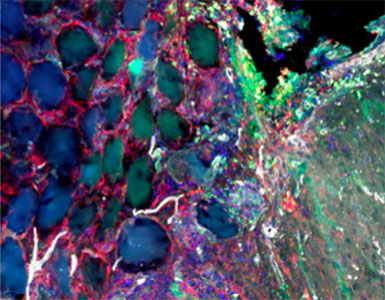
Building on these principles, STEALTH (Surface-Tethered Engineered Alloprotective Ligands for Transplant Health) applies a two-step bioorthogonal chemistry strategy to immobilize immunomodulatory ligands, such as PD-L1, directly on graft surfaces. In fully allogeneic rat kidney transplantation models, surface-tethered PD-L1 significantly improved renal function and extended graft survival without systemic immunosuppression. Mechanistically, PD-L1 attenuated immune-mediated injury while reshaping the graft immune microenvironment, promoting the emergence of regulatory T cell–rich niches consistent with regulatory tertiary lymphoid structures. Notably, preserved graft function occurred despite dense lymphocytic infiltration, demonstrating a decoupling of histologic inflammation from functional rejection and underscoring the need for integrated clinical, cellular, and spatial analyses. Multimodal interrogation, including TUNEL staining and multiplexed immunofluorescence (CODEX), revealed reduced cell death and spatially organized immune populations, supporting a protective role for PD-L1 beyond canonical T cell inhibition. Segmental analysis further suggested that PD-L1 confers protection against ischemia-reperfusion injury, indicating a non-canonical cytoprotective role for this co-inhibitory ligand. In addition to regulatory T cells, CD56⁺ cell populations localized to Bowman’s capsule were enriched, consistent with emerging descriptions of renal regenerative niches. Together, these findings demonstrate that localized presentation of inhibitory ligands can reprogram the graft-immune interface and preserve function independent of traditional markers of rejection.
Translation of STEALTH to porcine kidneys focused on clinical feasibility and scalability, including the development of gravity-driven perfusion protocols compatible with standard transplant workflows, optimization of preservation solution exchange to maintain conjugation efficiency, and validation of uniform cortical ligand distribution. Autotransplantation of STEALTH-modified grafts demonstrated immediate reperfusion, recovery of urine output, and absence of off-target toxicity. In parallel, we established a stringent allogeneic porcine transplant model (SLA-mismatched Yucatan-to-Yorkshire) characterized by rapid and reproducible rejection within one week, providing a clinically relevant platform for therapeutic testing. Ongoing studies are leveraging this model to define the effective dosing and durability of STEALTH-mediated protection in large animals. Together, these results demonstrate that STEALTH has the potential for effective, organ-specific immune modulation across scales, from mechanistic rodent models to clinically relevant large-animal systems.
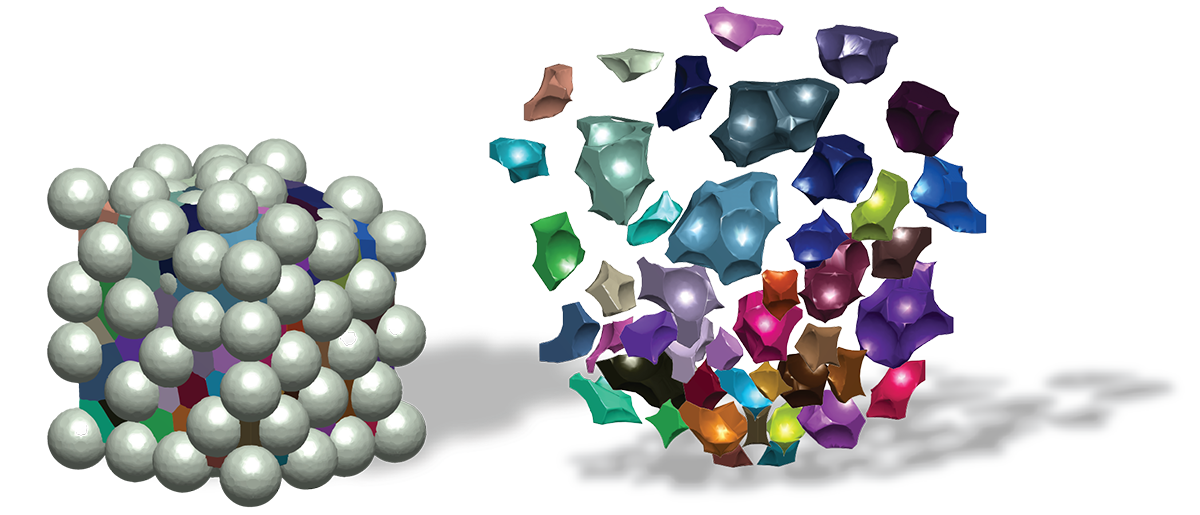
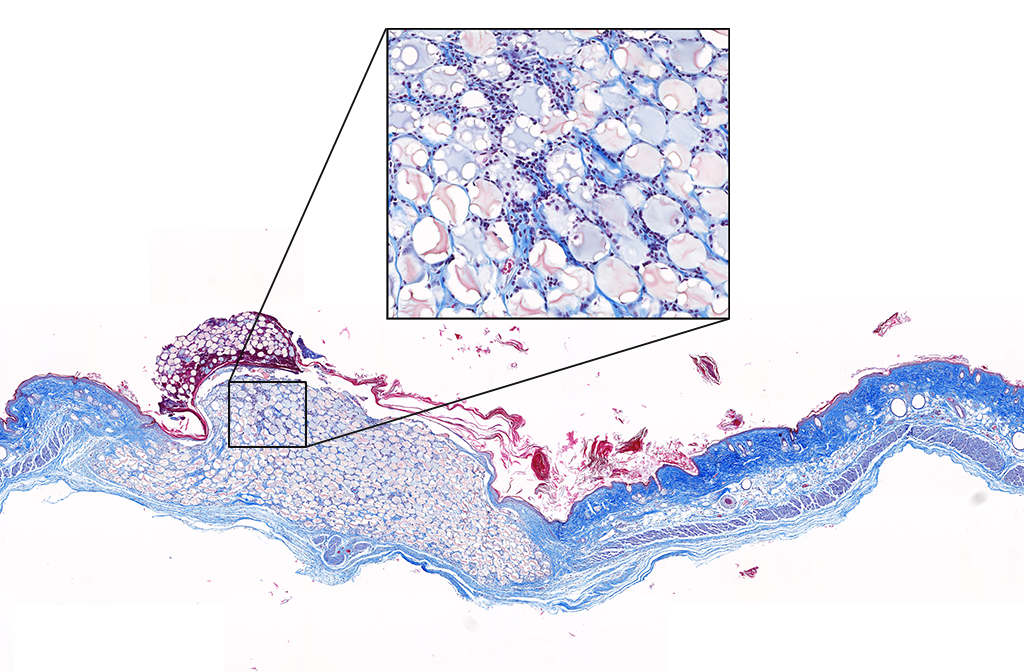
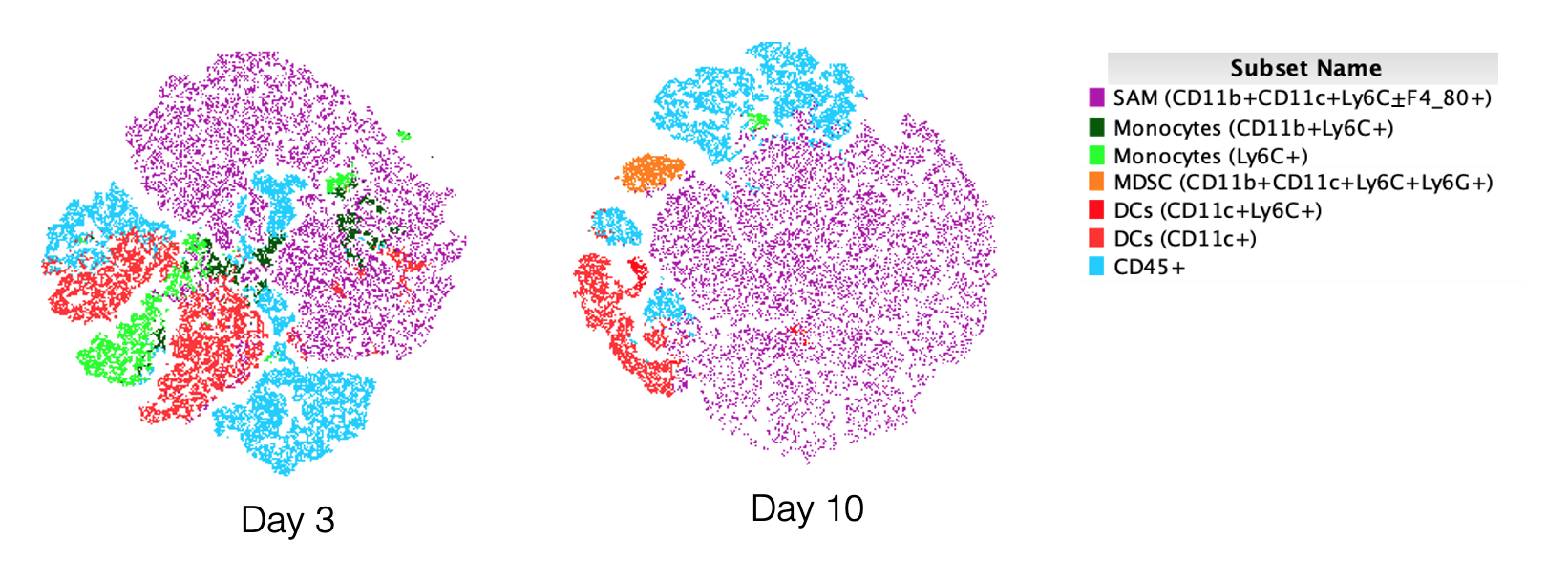
Complementing these translational strategies, we turned to reductionist murine models to interrogate the fundamental principles governing graft-directed immune modulation. Building on the historical role of skin transplantation as a foundational model in transplant immunology, we leveraged fully allogeneic murine skin grafts in C57BL/6 recipients as a tractable platform to study how biomaterials and defined antigens shape the local immune microenvironment and enable therapeutic discovery. To establish a biomaterial framework, we compared conventional wound matrices, including Woun’dress and bulk hydrogels, with microporous annealed particle (MAP) scaffolds, enabling direct evaluation of how material architecture and chemistry influence alloimmune responses. Drawing on prior observations of chirality-dependent immune engagement in wound healing, we engineered MAP hydrogels composed of L- and D-peptide microgels and demonstrated that stereochemistry directs early antigen-presenting cell activation, lymph node trafficking, and downstream T cell polarization in the transplant setting. A racemic formulation (R-MAP) attenuated co-stimulatory signaling and reduced donor-specific antibody formation, achieving durable modulation of humoral alloimmunity beyond systemic CTLA4-Ig therapy and highlighting chirality as a tunable parameter for local immune control.
In parallel, we evaluated a complementary reporter-based system using GFP and luciferase in the NoGlow mouse model to enable longitudinal, non-invasive tracking of graft viability and highlighted the utility of reporter-tolerized mice for studies in transplantation, extending this model from oncologic studies to transplant. While NoGlow mice were engineered to mitigate xenoantigen-driven rejection of these reporters, we also leveraged the inherent immunogenicity of GFP and luciferase in non-tolerant wild-type NoGlow- settings to model antigen-specific immune responses. In this context, GFP and luciferase functioned dually as quantitative readouts of graft survival and as defined xenoantigens, enabling high-resolution profiling of rejection kinetics where NoGlow recipients served as tolerized controls against which to benchmark rejection prevention. This platform was applied to accelerate screening of localized biomaterials and systemic therapeutics as immunosuppressive strategies, including comparative studies with Woun’Dress, bulk hydrogels, and granular materials as well as combination therapy with belatacept and rapamycin, where reporter signal dynamics revealed differential effects on graft viability and function that were not captured by endpoint analysis alone. By integrating real-time imaging with terminal histologic and immunologic assessment, this system enabled rapid, high-throughput comparison of biomaterials and therapeutic regimens, directly informing the design of protective, locally acting interventions. Together, these studies establish murine skin transplantation as a powerful discovery platform and identify biomaterial stereochemistry and real-time, antigen-specific tracking as synergistic tools for engineering spatially confined immunomodulatory strategies.
Collectively, this dissertation integrates ex vivo organ perfusion, bioorthogonal chemistry, biomaterial engineering, longitudinal imaging, and multi-scale transplantation models to systematically develop localized immunomodulatory strategies. The findings demonstrate that engineered chemical and biomaterial interfaces can: (1) transform organs and tissues into programmable therapeutic platforms, (2) preserve graft function and structural integrity, and (3) modulate both innate and adaptive immune responses in vivo. By bridging mechanistic discovery with translational implementation, this work establishes a foundational framework for organ- and tissue-directed immunotherapy and provides a path toward improving transplant outcomes while minimizing systemic immunosuppression.
Read the full dissertation here: TBD